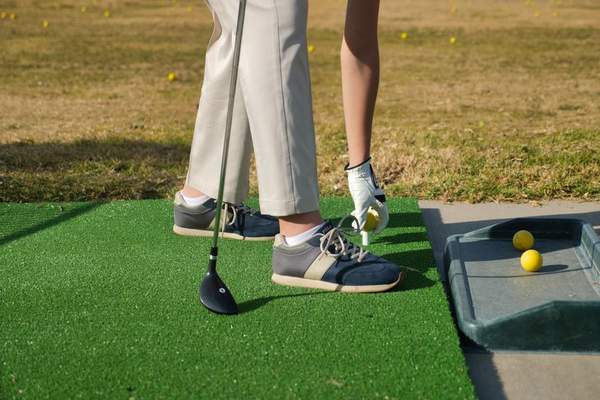
A productive range session should do more than produce a few satisfying shots before you head home. The goal is to make practice feel enough like golf that the skills you build can survive changing clubs, changing targets, imperfect strikes, and the pressure of having only one ball to hit. A useful driving range practice plan needs structure: warm up, sharpen one skill, force regular decisions, and finish with shots that resemble what you face on the course.
Start With a Purpose, Not a Bucket Size
Before the first ball, decide what the session is for. That purpose might be improving mid-iron contact, tightening driver dispersion, rebuilding confidence after a poor round, or preparing for a particular course. One clear objective is usually more useful than trying to repair every part of the swing at once.
A simple range session plan can be divided into four phases: warm-up, focused skill work, random practice, and course simulation. If you have 45 minutes, for example, you might spend about 10 minutes warming up, 15 minutes on one priority, 10 minutes changing clubs and targets, and the final 10 minutes simulating real holes.
Warm Up With Short, Comfortable Swings
Begin with a wedge or another short club and make easy swings to a clear target. The first few shots are not a test. They are a chance to establish balance, rhythm, and contact. Gradually increase the length and speed of the swing before moving into longer clubs.
This part of a driving range routine is also a good time to check basic setup. Pick an intermediate target, aim the clubface, settle your feet, and make a balanced swing. If you use alignment rods, make sure they are aimed where you think they are. Practice is more useful when your visual alignment matches your intended target.
Use a Focused Block to Work on One Skill
Once you are warm, spend a short block working on the main priority for the day. This is the place for a swing feel, contact drill, start-line drill, or another piece of purposeful golf practice. Keep the goal measurable. Instead of telling yourself to “hit better irons,” try to start eight of the next 12 shots within a defined corridor.
Look for patterns over several shots rather than reacting to every result. If the same miss keeps appearing, make one adjustment at a time instead of changing grip, posture, backswing, tempo, and ball position together.
Change Clubs and Targets Before Practice Gets Too Comfortable
Repeatedly hitting the same club to the same flag can improve familiarity with that exact task, but golf rarely gives you that repetition. Once the focused block is complete, introduce variety. Change clubs every one or two shots and alternate between left, centre, and right targets.
Useful golf range drills do not need to be complicated. Try a three-shot sequence: a wedge to a short target, a 7-iron to a medium target, and a driver to an imaginary fairway. Then repeat with different targets. The point is to make a fresh decision before each ball instead of operating on autopilot.
Practice the Same Pre-Shot Routine You Use on the Course
A range mat can encourage rapid-fire hitting, so deliberately slow the session down. Step behind the ball, choose a specific target, picture the shot, make any rehearsal you normally use, step in, aim, and swing. PGA instruction commonly emphasizes rehearsing a consistent pre-shot routine during practice because the routine itself is part of transferring range work to the course.
You do not need an elaborate ritual. What matters is that the sequence is repeatable. A short routine also creates a natural pause between balls, giving you time to evaluate the previous shot and commit to the next one.
Finish by Playing Imaginary Holes
The final phase should feel less like practice and more like golf. Choose a course you know and “play” several holes on the range. If the first hole requires driver, hit one driver to an imaginary fairway. Based on the result, choose the club you would realistically have for the approach. If the drive would have found trouble, adjust the next shot rather than pretending every tee ball finished perfectly.
For example, imagine a 410-yard par four with trouble left. Pick two range markers as the edges of your fairway and hit one tee shot. If it finishes on the right side, picture the angle into the green and choose an appropriate iron. Give yourself only one attempt at each shot. That one-ball constraint makes the exercise more realistic because there is no immediate do-over.
Track Patterns, Not Perfect Shots
After the session, take one minute to record what happened. Write down the main miss, the club that felt most reliable, the drill that helped, and one priority for the next visit. A short record connects one practice session to the next and prevents every trip to the range from starting from zero.
Frequently Asked Questions
How many balls should I hit during a driving range practice plan?
There is no ideal number for everyone. A smaller bucket hit with full attention, target changes, and a routine can be more useful than a large bucket hit quickly. Choose a volume that lets you maintain concentration and good movement quality.
Should I hit every club in my bag at the range?
Not necessarily. Use the clubs that support that day’s goal, then include enough variety to prevent the session from becoming repetitive. A short session might involve wedges, one mid-iron, a hybrid or fairway wood, and the driver.
Is block practice or random practice better?
Both have a role. Repetition can help when you are learning or adjusting a movement, while changing clubs, targets, and shot demands makes practice more representative of actual golf. A balanced session often uses focused repetition first and more random practice later.
How can I make range practice transfer to the course?
Use specific targets, go through your normal pre-shot routine, change clubs frequently, give yourself only one ball for simulated shots, and finish with imaginary holes. Those habits add decision-making and consequence that are missing when you simply rake over another ball.
Build Sessions That Look More Like Golf
The most useful range work is not the session with the prettiest streak of shots. It is the session that teaches you to prepare, choose, commit, execute, evaluate, and then start again with a different problem. Warm up gradually, spend a short period on one priority, add target and club changes, rehearse your routine, and finish with realistic course simulation. That structure turns ordinary range time into practice that has a better chance of showing up when you have one ball, one target, and a scorecard in your pocket.