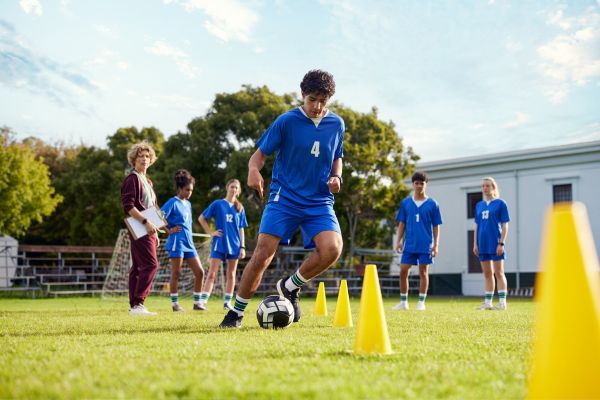
High school sports occupy a strange space between childhood and adulthood. Athletes are expected to compete seriously, train consistently, manage school responsibilities, and often prepare for college opportunities — all while still physically and emotionally developing. It’s an exciting stage, but also a demanding one.
That’s why high school athlete training has become far more structured than it used to be. A few decades ago, many teenage athletes relied mostly on team practices and occasional conditioning sessions. Today, training often includes strength work, mobility routines, speed development, recovery planning, and nutrition awareness.
Still, there’s an important balance to maintain.
Young athletes do not need professional-level intensity every single day. The goal during high school is not simply maximizing performance immediately. It’s building athletic foundations that support long-term development while reducing injury risk and burnout along the way.
The strongest training plans for high school athletes therefore focus on progression, consistency, and overall physical development rather than chasing constant exhaustion or unrealistic expectations.
Why Structured Training Matters During High School
Teenagers experience rapid physical changes. Strength increases, coordination improves, muscles develop, and movement patterns evolve quickly during adolescence. These years create an important window for athletic growth because the body adapts rapidly when training is done properly.
Without structure, though, many young athletes either undertrain or overtrain.
Some rely entirely on sport practice without developing strength or mobility. Others try copying advanced workouts they see online, often pushing themselves too hard without understanding recovery or technique.
A well-designed high school athlete training program helps bridge that gap.
The purpose isn’t just improving sports performance. Good training teaches discipline, body awareness, movement quality, and healthy routines that often remain valuable far beyond athletics.
In many ways, the habits developed during high school shape how athletes approach physical health for the rest of their lives.
Strength Training Builds a Foundation
Strength training used to carry unnecessary fear around younger athletes. Some people believed lifting weights too early could damage growth or create injuries. Modern sports science largely moved beyond those concerns, provided training is supervised and age-appropriate.
In reality, proper strength training helps protect young athletes.
Exercises like squats, lunges, push-ups, rows, deadlifts, and core work improve stability and overall movement control. Stronger muscles support joints more effectively, which becomes especially important during sports involving jumping, sprinting, or physical contact.
What matters most is technique.
Teen athletes often rush toward heavier weights before mastering movement patterns. Coaches and trainers increasingly emphasize control, balance, posture, and consistency first. Learning how to move properly creates safer long-term progress than chasing numbers too quickly.
And honestly, teenagers rarely need extremely complicated programs. Consistent basics tend to work surprisingly well.
Speed and Agility Development During Adolescence
One reason high school athlete training looks different from adult training is that teenage bodies are still refining coordination.
Awkward growth phases are common. A student may suddenly gain height and temporarily lose fluid movement because the body is adjusting to new proportions. Training helps athletes reconnect coordination with strength as they mature physically.
Speed development during high school focuses heavily on mechanics and body control.
Sprint drills, acceleration work, footwork exercises, and reaction training improve movement efficiency rather than simply exhausting athletes. Agility sessions also help athletes change direction more safely and confidently during competition.
What’s interesting is that faster athletes are not always the ones trying hardest. Many move efficiently because they’ve developed rhythm, posture, and balance through repeated quality training.
Young athletes benefit greatly from learning that athleticism is about control as much as intensity.
Recovery Is Often Ignored by Teen Athletes
Teenagers are known for having energy, but recovery still matters enormously.
One of the biggest mistakes in high school athlete training is treating constant fatigue like proof of dedication. Many athletes juggle school, practices, games, travel, homework, social pressure, and sometimes additional club sports simultaneously.
That schedule becomes exhausting quickly.
Without recovery, performance usually declines even if motivation stays high. Sleep quality drops. Muscles remain sore longer. Focus disappears during games. Minor injuries begin accumulating quietly.
Modern coaches increasingly emphasize recovery as part of athletic development rather than something separate from it.
Hydration, sleep, nutrition, mobility work, and rest days directly influence how well the body adapts to training. Teenage athletes especially need enough sleep because growth and recovery processes remain extremely active during adolescence.
Ironically, the athletes who recover best often improve the fastest.
Sport Specialization Can Become Complicated
Many high school athletes now feel pressure to specialize in one sport earlier than before. Families worry about scholarships, rankings, and competitive advantages. As a result, some teenagers train year-round in a single sport with very little variation.
This approach sometimes works, but it also creates problems.
Overuse injuries become more common when the same movement patterns repeat constantly without balance. Mentally, athletes may lose enjoyment if sports start feeling like nonstop obligation instead of something meaningful or exciting.
Multi-sport participation still offers valuable benefits for many teenagers.
Playing different sports develops broader athletic coordination, adaptability, and movement awareness. Basketball players may improve footwork through soccer. Football athletes often benefit from track training. Baseball players gain mobility and conditioning through other activities.
Variety can build more complete athletes overall.
Nutrition Plays a Larger Role Than Many Realize
Teenage athletes often underestimate how much nutrition affects performance.
Skipping meals, relying heavily on processed snacks, or under-fueling before practices usually catches up eventually. Growth, school stress, and athletic training create significant energy demands on the body.
Nutrition for high school athletes does not need to become obsessive or restrictive. In fact, overly rigid approaches can become harmful during adolescence. The focus should stay practical and balanced.
Consistent meals, hydration, protein intake, carbohydrates for energy, and recovery foods after training generally matter more than trendy supplements or complicated diet plans.
Many young athletes notice major improvements simply by eating more consistently and sleeping better.
Sometimes the fundamentals create the biggest performance changes.
Mental Pressure Has Increased for Young Athletes
High school sports feel more public than they once did.
Social media highlights rankings, performances, highlights, and recruiting updates constantly. Teen athletes compare themselves not only to classmates, but to athletes across entire regions or even nationally. That comparison creates pressure many adults underestimate.
Mental stress affects performance directly.
Confidence fluctuates heavily during adolescence, especially when athletes tie self-worth too closely to results. Injuries, losses, mistakes, or reduced playing time can feel emotionally overwhelming during these years.
This is why mental resilience matters within high school athlete training.
Athletes benefit from learning emotional balance, stress management, focus routines, and healthy perspectives around competition. Sports should challenge young people, but they should not completely consume personal identity.
The healthiest athletes usually maintain some balance outside competition too.
Training During the Offseason Matters
Many performance improvements happen outside the actual season.
During competition periods, athletes often spend most of their energy maintaining performance while managing games and practices. The offseason allows more room for building strength, improving weaknesses, and recovering physically.
Offseason training also reduces injury risk because athletes can address imbalances before returning to full competition intensity.
At the same time, offseason periods should still include rest.
Teen athletes sometimes fear losing progress if they take breaks, but short recovery phases often help the body reset physically and mentally. Constant year-round intensity eventually becomes counterproductive.
Sustainable improvement happens in cycles, not nonstop extremes.
Coaching Quality Makes a Huge Difference
Not all training environments are equally healthy.
Good coaches understand that teenage athletes are still developing physically and emotionally. They prioritize safety, progression, communication, and long-term growth rather than short-term results alone.
Poor coaching environments often glorify overtraining, punishment, or unrealistic expectations. Those approaches sometimes produce temporary results but frequently lead to burnout or injury over time.
Young athletes benefit most from coaches who teach discipline while also respecting recovery, development, and emotional wellbeing.
The strongest training programs are usually the ones athletes can maintain consistently without fear or exhaustion dominating the experience.
Conclusion
High school athlete training is about far more than building stronger bodies or improving statistics. These years represent an important stage of growth where young athletes develop movement skills, mental resilience, discipline, and habits that often stay with them long after graduation.
The most effective training plans focus on balance. Strength matters, but so does recovery. Speed matters, but so does coordination. Competition matters, but so does enjoyment. Athletes who learn these lessons early tend to improve more steadily and stay healthier along the way.
In the end, successful high school training is not simply about creating better athletes for one season. It’s about helping young people build confidence, resilience, and sustainable physical foundations that support them both inside and outside sports for years to come.