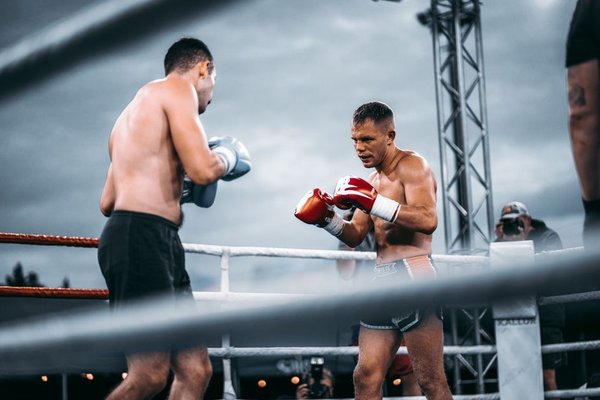
Two boxers can throw the same jab, slip the same counter and still fight very different contests depending on the rules around them. The biggest difference in amateur vs professional boxing is not simply skill or punching power. It is the amount of time available, what judges reward, how events are organised and what competitors are trying to achieve.
Amateur boxing, often called Olympic-style boxing, usually rewards effective work across a short contest. Professional boxing may demand a longer tactical plan, with careers built around individual bouts, rankings and commercial opportunities. Neither format guarantees easier opposition or a safer experience.
Amateur vs Professional Boxing at a Glance
At elite international level, amateur bouts normally run for three rounds of three minutes. Professional men’s contests commonly run for four, six, eight, ten or twelve three-minute rounds. Women’s professional bouts often use two-minute rounds, although arrangements vary by commission and event.
Both formats permit victories on points and stoppages. Amateur competitions are commonly tournament-based, while professional contests are usually separately arranged and approved. These differences change the rhythm of a fight before the opening bell even sounds.
Boxing Bout Length Changes the Strategy
Amateur bouts are short and urgent
Under World Boxing rules, elite and under-19 contests consist of three three-minute rounds, with one-minute breaks. Under-17 contests use three two-minute rounds. Local amateur boxing rules can differ by age group and governing organisation.
With only nine minutes of action in an elite bout, losing the opening round creates immediate pressure. Boxers often work to establish distance quickly, land clean combinations and finish exchanges without surrendering obvious counters. There is less opportunity to spend several rounds studying an opponent.
Professional bouts offer more time to adjust
A six-round prospect fight and a twelve-round championship contest ask different questions. Over longer distances, fighters can test reactions, attack the body, manage energy and change tactics when an early approach fails. Taking a round to collect information may be reasonable in a long fight but costly in a three-round tournament bout.
Imagine a boxer facing an opponent who keeps a high guard. In an amateur contest, quick angles and clean shots around that guard may be the practical route to winning rounds. Over twelve professional rounds, sustained body attacks could gradually lower the guard. The better choice depends partly on the clock.
How Scoring Works in Each Format
A persistent myth says amateur boxing counts every punch while professionals only reward damage. Modern high-level competitions are more nuanced: both use a ten-point-must system, meaning the round winner generally receives ten points and the other boxer fewer.
Olympic-style judging prioritises scoring blows
World Boxing judges assess the number and quality of clean scoring blows first, followed by technical and tactical superiority and competitiveness. A busy boxer does not automatically win by throwing more punches; shots must land legally and clearly. Five judges score international World Boxing bouts.
Professional judges consider effective boxing
Professional contests commonly use three judges. Under the Association of Boxing Commissions’ guidance, clean punching, effective aggression, ring generalship and defence inform scoring.
For a closer look at why judges can disagree about a tight round, a boxing scoring explained guide is a useful companion. Neither format awards a win simply for walking forward or swinging hardest.
Equipment and Safety Rules Are Not Identical
Headgear is the most visible difference, yet the old claim that all amateurs wear it is outdated. Under World Boxing’s published rules, elite men compete without headguards, while elite women and younger age categories wear approved headguards. Professional fighters generally compete without headgear.
Glove specifications also vary. World Boxing uses ten- or twelve-ounce competition gloves according to category and weight. Professional authorities commonly approve eight- or ten-ounce gloves depending on weight and jurisdiction.
Headgear can help protect against some cuts and surface injuries; it does not eliminate concussion risk. Knockouts and referee stoppages are possible in amateur boxing too. Anyone preparing to compete should obtain appropriate medical clearance and train with a qualified coach who follows their governing body’s rules.
Competition Structure, Weight Classes and Careers
Amateur pathways generally run through clubs, regional championships, national teams and international tournaments. At a knockout tournament, a boxer might need several victories across different days to win a medal.
Professional boxers usually work with promoters, managers and commissions to arrange approved contests. Their records, opponents, titles and marketability can influence future opportunities. They may earn purses, but income is far from guaranteed, particularly early in a career when training, travel and medical costs add up.
Weight divisions exist in both versions, but their names and limits do not align perfectly. Even the Olympic weight programme can change between Games. Understanding how boxing weight classes work helps explain why a fighter’s amateur division may not directly match their professional one.
Olympic Boxing vs Pro Boxing: Can Athletes Cross Over?
Yes. Many successful professionals began in amateur boxing, where repeated tournament bouts developed timing, composure and experience against different styles.
The Olympic label does not mean every participant must be a lifelong unpaid amateur. Eligibility depends on the applicable federation and Olympic qualification rules. For Los Angeles 2028, World Boxing oversees the qualification pathway; athletes must meet its requirements and qualify through the designated system.
If you hope to compete, start by asking a recognised local club which federation runs its events, what age and medical requirements apply, and how novice bouts are matched. Build dependable defence and conditioning before worrying about a professional debut. A boxing stance and footwork guide can help frame the technical basics, but supervised training is essential.
Frequently Asked Questions
Is amateur boxing easier than professional boxing?
No. Amateur bouts may be shorter, but elite tournaments feature highly skilled opponents and an intense pace. Difficulty depends on experience, opposition and level, not the label alone.
Do amateur boxers get knocked out?
Yes. Amateur boxing allows knockouts and referee stoppages, with protective procedures and count limits governed by the event rules. Shorter bouts and headgear requirements in some categories do not remove the risk.
Are professional boxing rounds always three minutes?
Men’s professional rounds are generally three minutes. Women’s contests often use two-minute rounds, although some events or jurisdictions permit different arrangements. Always check the specific bout regulations.
Do amateur and professional boxers use different scoring systems?
Both generally use ten-point-must scoring, but their judging criteria, number of judges and competition procedures differ. Amateur judges emphasise clean scoring blows and technical execution; professional judging also weighs effective aggression, defence and ring control.
Which Format Makes More Sense?
For most new competitors, a properly supervised amateur programme offers a structured way to gain ring experience and learn how to compete under pressure. Professional boxing introduces different pacing, contractual decisions and career risks. For fans, the simplest way to understand the contrast is to watch the opening round: one boxer may have just minutes to establish an advantage, while another could be planning for the final third of a much longer fight.