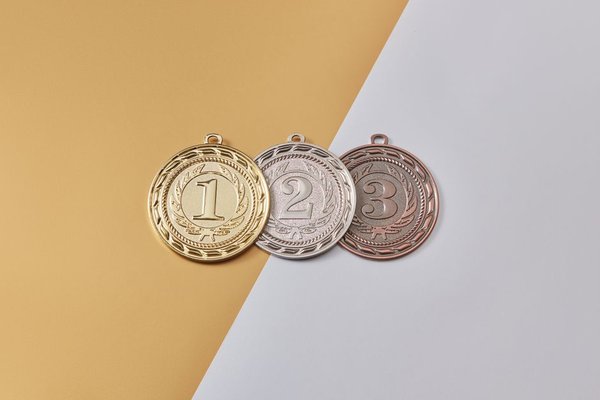
Olympic medal tables look simple: count the gold, silver and bronze medals, add a total, then place each nation in order. The confusing part is the word “order.” A country with fewer medals overall can appear above another with a much larger haul because the most common Olympic-style method gives priority to gold medals rather than total medals.
That makes the table more than a running count. It uses conventions about ranking, ties, team medals and later result changes. Understanding those conventions makes Olympic medal standings much easier to read.
How Olympic medal table rankings usually work
The standard method used by many Olympic result pages and international sports publications sorts nations first by gold medals, then by silver medals, then by bronze medals. Total medals are normally shown as an extra column, but the total does not decide the ranking unless a source explicitly chooses a total-medals system.
First compare gold counts. If one nation has more golds, it ranks higher. If golds are equal, compare silvers. If gold and silver are equal, compare bronzes. Only when all three medal counts match is there a true medal-table tie.
For example, suppose Nation A has 5 golds and no other medals, while Nation B has 4 golds, 10 silvers and 10 bronzes. Nation B has 24 medals compared with Nation A’s five, but Nation A ranks higher under a gold-first system because five golds outrank four. This is why an Olympic medal count and a nation’s table position do not always move together.
Why gold medals have so much influence
The gold-first system rewards victories before depth of podium finishes. A nation that wins more events can therefore outrank one that reaches the podium more often but wins fewer titles. A single gold can cause a noticeable jump in the medal table rankings when several nations have similar records.
Silver and bronze still matter. They become decisive when nations are level on golds. A country with 8 golds, 7 silvers and 3 bronzes ranks above one with 8 golds, 6 silvers and 20 bronzes because silver breaks the tie before bronze is considered.
There is also a useful distinction between common medal-table practice and the formal structure of the Games. The Olympic Charter has stated that the IOC and organising committee do not draw up a global ranking per country. Medal tables are widely used as reference and reporting tools, but they are not an overall Olympic team championship.
How medal table ties are handled
Medal table ties occur when two or more National Olympic Committees have identical gold, silver and bronze counts. If two nations both finish with 3 golds, 2 silvers and 1 bronze, neither has a medal-based advantage.
Different websites may display that situation differently. Some give both nations the same rank and then skip the following position. Others keep them tied but arrange their names alphabetically. Alphabetical order is only a presentation choice; it does not break the sporting tie.
A simple tie example
Imagine Nation C has 3 golds, 2 silvers and 1 bronze, while Nation D has exactly the same record. Nation E has 3 golds, 1 silver and 8 bronzes. Nations C and D are tied and both rank above Nation E because their extra silver matters before Nation E’s larger bronze total is considered.
What the total column actually means
The total is simply gold plus silver plus bronze for that National Olympic Committee. It measures the volume of podium finishes, but under gold-first ranking it is descriptive rather than decisive.
A team-event victory counts as one medal in the national medal table, not one for every athlete who receives a physical medal. If a basketball team wins gold, the nation receives one gold in the table. The same principle applies to relays and other team events.
Some events can award more than one bronze medal because of the sport’s competition format. Ties, shared placings and later medal reallocations can also mean the number of medals awarded is not always a simple one-gold, one-silver, one-bronze pattern for every event.
Why different sources may show nations differently
The biggest difference is ranking method. Some broadcasters and media outlets prefer total medals. Under that approach, the nation with the largest combined number of gold, silver and bronze medals appears first, so the order can look very different from a gold-first table.
Sources can also differ because of timing. A live table changes as events finish, while historical tables may be updated after disqualifications, appeals or medal reallocations. If an athlete is later stripped of a medal, national totals can change after the closing ceremony.
Names and delegation labels can create another difference. Olympic records are organised around National Olympic Committees and the recognised delegations that competed at a particular Games. Historical teams, special delegations and country-name changes may therefore appear differently from modern country lists.
When comparing two Olympic medal standings, check the ranking rule first, then confirm both tables cover the same Games and the same point in time. That simple habit prevents most apparent contradictions.
How to read a medal table quickly
Start with the gold column rather than the total. If two nations have the same number of golds, compare silvers, then bronzes. Treat the total as a summary of podium volume, not automatically as the ranking key.
Useful related topics for understanding the standings include Olympic Games results, how Olympic qualification works, and the history of Olympic medals. They provide context for where medal opportunities come from and why they vary between sports and editions of the Games.
Frequently asked questions
Are Olympic medal tables ranked by gold medals or total medals?
The most common Olympic-style method ranks by gold medals first, then silver, then bronze. Some media organisations choose to sort by total medals instead, so check the source’s ranking method.
What happens when two countries have the same medal count?
If their gold, silver and bronze totals are all identical, they are tied on medal performance. A website may list them alphabetically or give them the same displayed rank, but alphabetical order does not make one nation rank higher on medals.
Does a team gold count as several medals in the national total?
No. Although eligible athletes on a medal-winning team may each receive a physical medal, the medal table records one medal for that event and nation.
Can Olympic medal tables change after the Games finish?
Yes. Disqualifications, appeals and medal reallocations can alter historical results, and reliable databases may update their counts after an official result changes.
Final perspective
An Olympic medal table is easiest to understand as a hierarchy of medal colours rather than a simple sum. Gold usually decides position first, silver breaks a gold tie, and bronze breaks a gold-and-silver tie. Totals answer a different question: how many podium finishes did a delegation achieve?
Once that distinction is clear, medal table ties, surprising rankings and differences between publishers become much less mysterious. The table is a concise snapshot of Olympic success, but the method behind the order matters as much as the numbers.