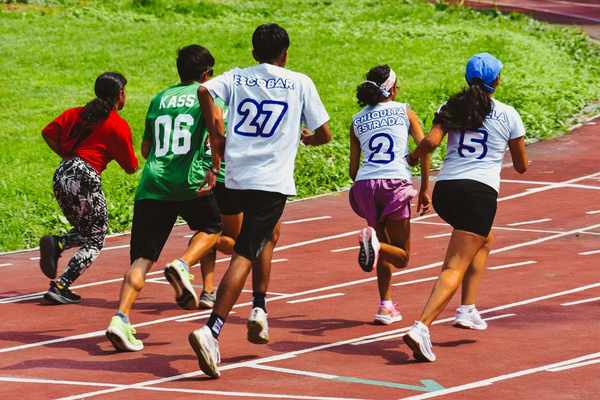
A 5000m race can feel controlled one lap and chaotic the next. Across 12 and a half laps, a small pacing mistake, an unnecessary move into lane two, or a badly timed surge can matter as much as fitness. A sound 5000 meter track strategy combines three decisions: how fast to run, where to sit in the field, and when to use the energy saved for the finish.
Turn Your Goal Time Into a Lap Strategy
On a standard 400m track, the 5000m covers 12 full laps plus 200m. Before racing, translate your target finish into a 400m split and memorize a few checkpoints. That is more reliable than staring at your watch while the pack changes speed.
For a 20:00 goal, average pace is 96 seconds per 400m, or 4:00 per kilometer. The first finish-line crossing comes after 200m, roughly 48 seconds at goal pace, followed by 12 complete laps. Reaching 3000m around 12:00 keeps you on schedule.
These numbers are guides, not commands. For a personal best, relatively even pacing usually provides a sensible foundation. In a tactical 5k track race, the field may run uneven splits, so following the stopwatch rigidly could leave you detached from a useful group.
Race the Opening 1000m Without Paying Later
The first few hundred meters tempt runners into sprinting for position. Accelerate smoothly to establish space, then settle into your intended rhythm. Avoid getting trapped behind substantially slower competitors, but do not turn the opening lap into an interval repetition.
Check your breathing and posture around 600m and 1000m. Your stride should feel purposeful rather than frantic. If the leaders are running much faster than your realistic pace, letting them go may be wiser than chasing. If you are racing for place and their rhythm is comfortable, stay connected.
A split slightly off plan is often less damaging than repeated accelerations to correct it. Think in groups of laps, not isolated stopwatch readings.
Stay Mentally Engaged Through the Middle Laps
Between roughly 1600m and 3600m, fatigue rises while the finish still seems distant. Keep your shoulders relaxed, maintain your natural cadence, and choose a simple cue such as “hold rhythm.” Resist treating every uncomfortable sensation as evidence that you must slow down.
Every two laps, make a quick assessment: Are you running the shortest practical line? Is your group slowing? Are you closing gaps smoothly or wasting energy with repeated sprints? This habit turns lap awareness into useful decisions rather than nervous clock-watching.
Respond to Surges With Judgment
One of the most useful distance running tactics is deciding which accelerations deserve a response. If someone makes a brief surge, avoid immediately matching their highest speed. Increase effort progressively and see whether the move lasts. Chasing every burst can drain your finishing reserve.
However, when a decisive group of similarly matched runners begins pulling away, a controlled response may be necessary. Closing a small gap now is often easier than recovering a much larger one later. The distinction is between bridging deliberately and panicking.
Positioning: Save Distance and Keep an Exit
Lane one offers the shortest route around bends, but hugging the rail behind several runners can leave you boxed in. Staying wide for extended stretches adds distance. Aim for a position that balances efficiency with room to move, especially when the field accelerates.
When possible, settle behind someone running a useful pace rather than repeatedly taking and surrendering the lead. Avoid clipping heels or cutting across another athlete’s stride. Patience on a crowded bend is usually safer than forcing a pass.
Move Up Before You Have to Sprint
Imagine you are sixth with three laps remaining and the leaders begin stretching the group. Rather than sprinting around four runners on a bend, look for an opening on the straight and move forward at a controlled pace. Improving position before the bell may prevent an expensive detour during the final lap.
You do not need to lead with 800m remaining. You simply need a route from which you can respond. Good positioning is about options, not the lowest possible place number.
Prepare the Final 1200m and Time Your Kick
With three laps left, take inventory. Can you hold your form? Is the pace slowing enough to justify pressing forward? Can you reach a better position without running unnecessarily wide? The finishing kick starts with these choices, not just the final straight.
At 800m remaining, gradually increase commitment if you have strength available. At the bell, decide whether to press or sit close enough to react. Strong sustained runners may accelerate from 600m out; others get more from waiting until the final 200m. Neither approach works well when you leave an impossible gap.
Exiting the last bend, drive your arms, keep your gaze forward, and resist looking back. The ideal kick converts your remaining energy into speed rather than trying to recover from an overly aggressive first half.
Practice Race Decisions Before Race Day
Good 5000m pacing becomes easier when goal rhythm feels familiar. Track interval workouts reinforce pace judgment, while controlled changes of speed prepare you for tactical racing. A sensible 5K training plan develops the endurance needed to maintain technique under fatigue.
During an appropriate workout, try several repetitions at intended race pace with a brief controlled pickup, then return to rhythm. Notice how smoothly you settle after accelerating. The purpose is not to practice reckless surges but to build composure when competitors change speed. Keep your race-day warm-up routine familiar.
Avoid These Race-Day Mistakes
Going out too fast creates a debt that often arrives in the middle laps. Running wide around every bend wastes ground. Watching splits while ignoring nearby runners can cost you contact with the right group. Waiting until the last 100m to think about position can leave you with no space to pass.
After finishing, review where pace changed, whether the change was intentional, and how much effort overtaking required. Those observations make your next lap strategy more precise.
Frequently Asked Questions
How many laps are in a 5000m track race?
The event is 12.5 laps on a standard 400m track: an initial 200m to the finish line, followed by 12 full laps.
Is even pacing best for a 5000m?
Relatively even splits can help when chasing a fast time. In tactical races, maintaining contact and responding intelligently to pace changes may be more important than perfectly uniform laps.
When should I begin my finishing kick?
It depends on your speed endurance, the race situation, and remaining energy. Some runners build from 600m to 800m out; others rely on a shorter acceleration over the final lap or 200m.
Should I stay in lane one throughout the race?
Use the inside lane when safe and practical, but do not remain permanently boxed in. Move out briefly when a clear passing opportunity arises, then return to an efficient line without obstructing anyone.
Make Every Lap Serve the Finish
The strongest 5000 meter track strategy is adaptable, not complicated. Know your splits, minimize wasted distance, identify the gaps that matter, and respond to surges without panic. Reach the closing laps near enough to compete, with enough control left to produce a decisive kick.